The Legend of Yokohama: Where Tokyo Drift Comes to Life
You’ve seen the movie. I know. The neon lights, the screaming RB26s, parking garages that ignore physics and zoning laws. The Fast and the Furious: Tokyo Drift sold us a picture of Japan’s car culture – loud, illegal, impossibly cool. And honestly? Most of it was Hollywood smoke. Mirrors. But the spirit… that aggressive, gasoline-soaked obsession with the machine? That part is real.
Yokohama isn’t just Tokyo’s neighbor—it’s the spiritual home of the scene. Tokyo gets the glamour; Yokohama has the grit. This is where the Mid Night Club – the real one, not the video game built a legend doing 300km/h runs on the Wangan. The history is thick here. You feel it. It’s in the salt air off the bay and the sound of straight-piped exhausts slapping off concrete pillars. It’s messy. Loud. It is absolutely nothing like a polished movie set.
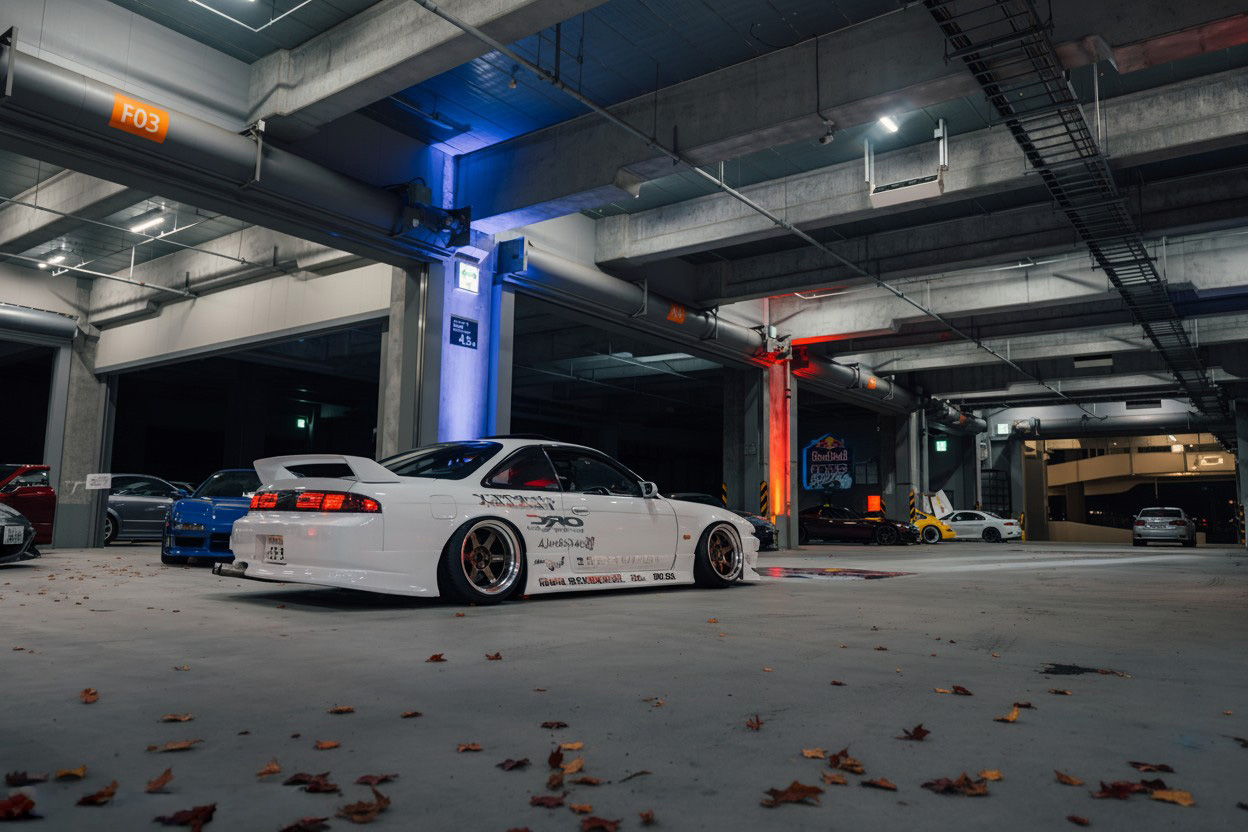
Ghosts of the Wangan: The Truth About the Mid Night Club
Before you touch the asphalt, respect the history. The movie gave us DK, but the real “Drift Kings” and Wangan racers were terrifyingly serious.
Back in the 80s and 90s, the Mid Night Club reigned. This wasn’t a bunch of kids in Civics. To join? Your car had to hit 250km/h (155mph). To be competitive… you needed to hit 300km/h (186mph) for sustained periods. We are talking highly tuned Porsche 911 Turbos – the famous “Blackbird” – Ferrari Testarossas, and Nissan Z-cars pushing 600+ horsepower.
They had a code: endanger the public, and you are out. The club disbanded in 1999 after a bad crash involving Bosozoku bikers put innocent bystanders in the hospital. But their ghost still haunts the highway. When you drive the Wangan at night, you aren’t just commuting. You’re driving on a racetrack that killed the golden era.
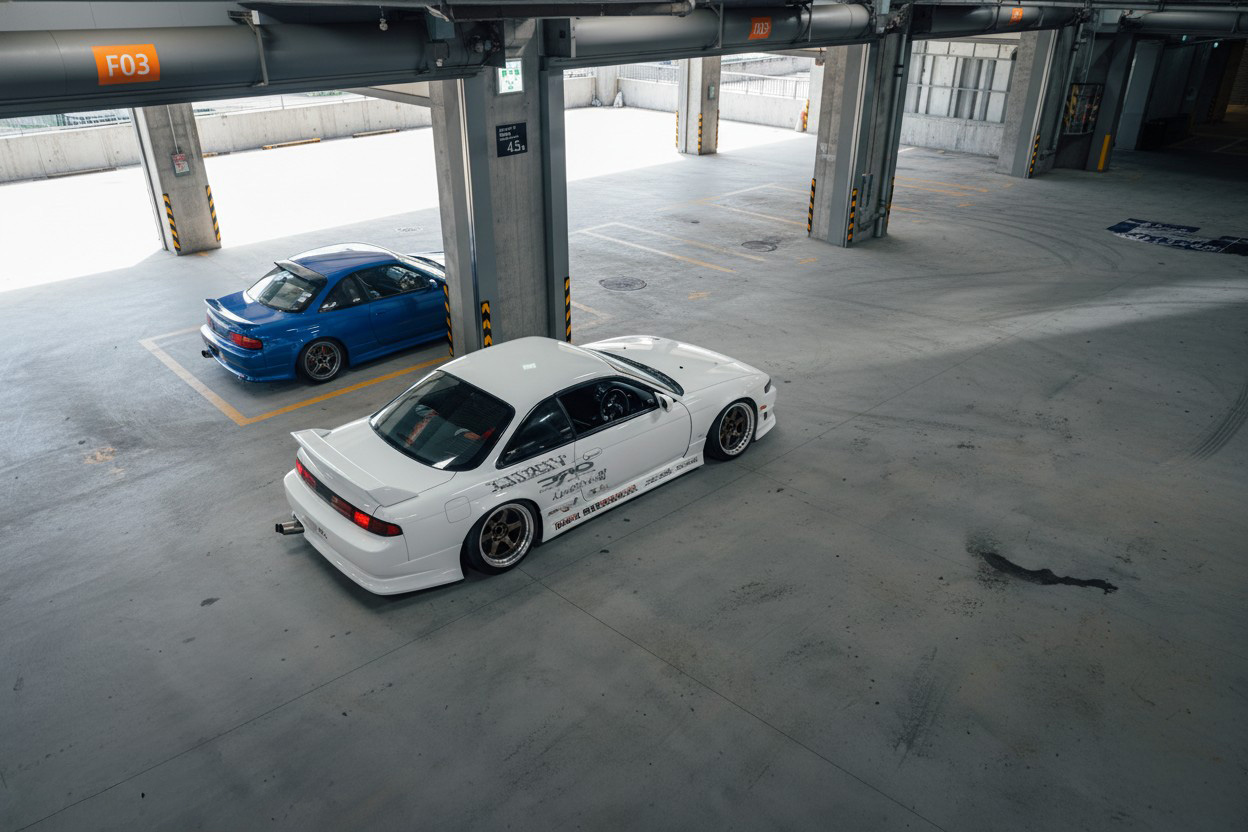
Daikoku Futo Parking Area: The Holy Grail of Car Meets
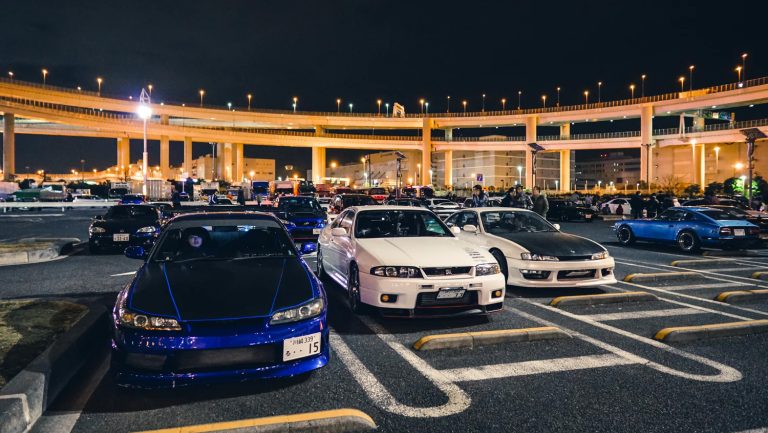
If you go to one place, make it this one. Daikoku Futo PA.
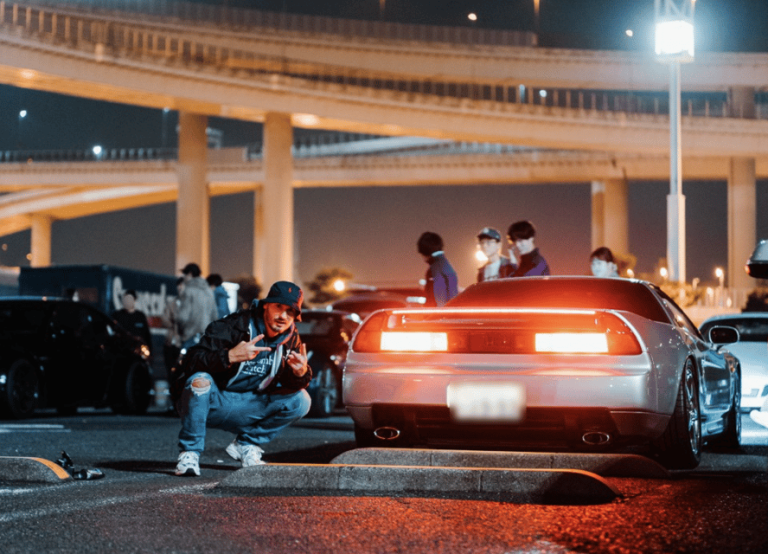
Technically, it’s a rest stop. Truck drivers sleep here. Families pee here. But look at the architecture – a man-made island in Yokohama Bay, spiraled by 360-degree off-ramps that act like a coliseum seating chart for the best car show on earth. The acoustics are accidental perfection. A rotary screaming down that ramp sounds like a chainsaw fighting a banshee.
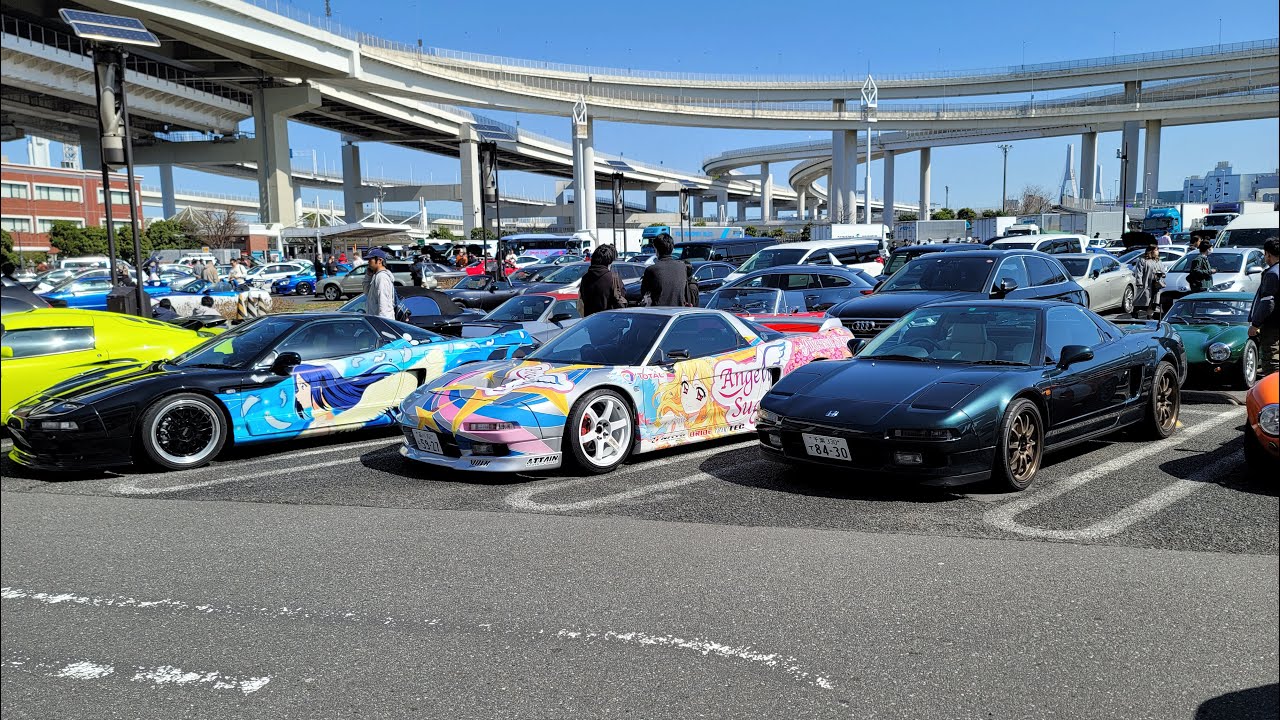
No organizer. No tickets. No “Show and Shine” sign-up. You just show up. Because it’s anarchy, you get weird mixes. I’ve seen a pristine Hakosuka Skyline next to a slammed Lamborghini with LEDs that would give an epileptic a seizure, right beside a rusty kei truck. Makes no sense. That’s why it works. It’s the heartbeat.
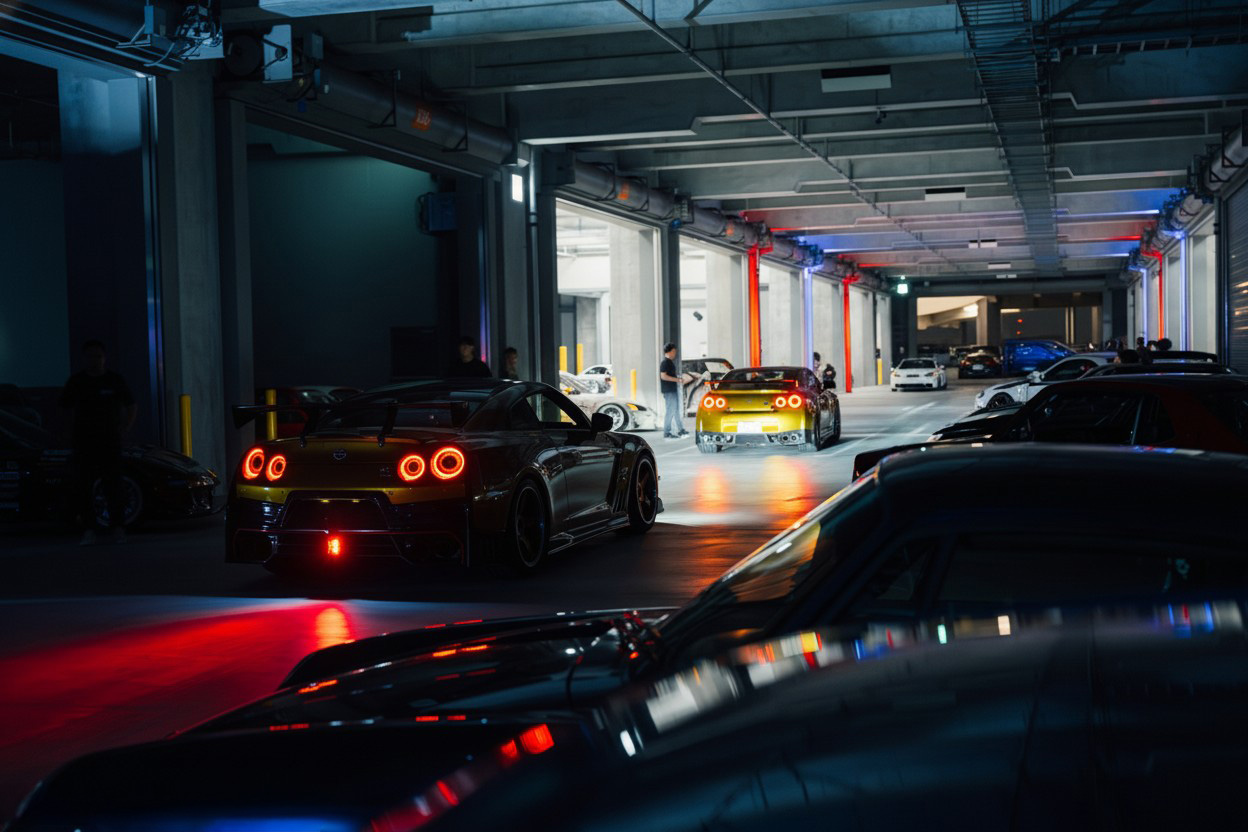
Tatsumi PA: The Photogenic Rival
While Daikoku is the King, Tatsumi PA is the Crown Prince.
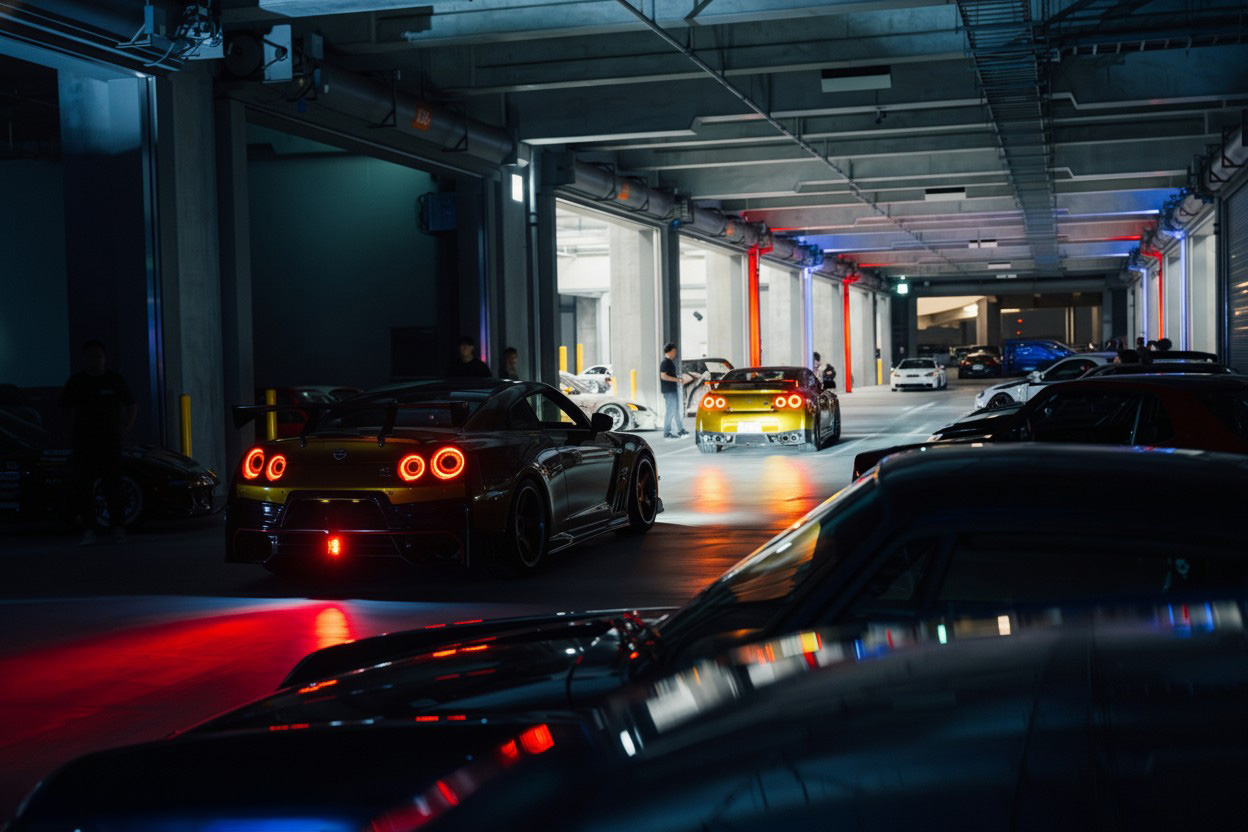
Located on the Fukagawa Route (Route 9) of the Shuto, Tatsumi is technically in Tokyo, but it’s an essential stop on the loop. Unlike the sprawling expanse of Daikoku, Tatsumi is small. Cramped. Suspended high above the ground.
Why go? The view.
You go to Daikoku for cars; you go to Tatsumi for the photo op. The parking area sits right next to high-rise luxury apartments. It creates a Cyberpunk backdrop that feels fake even when you’re standing there.
- Warning: Because it is small, police close Tatsumi much faster than Daikoku. If you see “Closed” flashing on the highway signs, don’t bother.
Understanding the Daikoku Meet Schedule: Best Days and Times to Visit
Here is where people mess up. They go on a Tuesday at 2 PM and see three Toyota Priuses and a vending machine.
The “schedule” is organic, but there are rhythms.
Do not take a taxi.
I mean, you can take one there. But the driver will drop you off and leave. There is no taxi stand to get back. Uber doesn’t work well inside the PA. I have seen terrified tourists wandering the truck stop at 1 AM begging for a ride back to Tokyo. Don’t be them.
- Friday Night: The warm-up. Good energy. Usually a mix of drift-style cars and local street racers.
- Saturday Night: The main event. This is when the heavy hitters come out. It gets packed. Chaos. If the weather is good, expect the lot to fill up by 9 PM.
- Sunday Morning: Totally different vibe. This is for the old guys with money. Think vintage Ferraris, rare Porsches, immaculate classic skylines. It’s quiet, respectful—coffee-in-hand type stuff.
Rain kills the vibe. Japanese car owners are weirdly protective of their paint (can’t blame them), so if it’s drizzling, turnout drops by 80%.
How to Access Daikoku PA: Rental Cars, Taxis, and Guided Tours
Listen carefully because this is where tourists get stranded.
You cannot walk into Daikoku PA.
It is an island in the middle of a highway. There is no sidewalk. Try to walk across the bridge and the police will pick you up.
The Options:
- Rent a Car: The best way. You need an International Driving Permit (IDP). The Wangan is intimidating if you aren’t used to driving on the left, but it’s the only way to truly get it.
- Pro Tip: Look for Omoshiro Rent-A-Car (Omoren). Unlike Hertz or Toyota Rent-A-Car, these guys specialize in JDM legends. You can rent an R34 GT-R, a Civic Type R (EK9), or an RX-7. It costs more. But driving an R34 into Daikoku is a core memory you will never lose.
- Guided Tours: There are guys now—some legit, some sketchy—offering “JDM Tours.” You pay a fee, hop in a van or sometimes an R34 passenger seat, and they drive you. It’s pricey, maybe $150-$200, but it guarantees you get there and get back.
Real vs. Movie: Comparing the Actual Drift Scene to Hollywood
Here’s the heartbreaker. Nobody is drifting inside Daikoku PA.
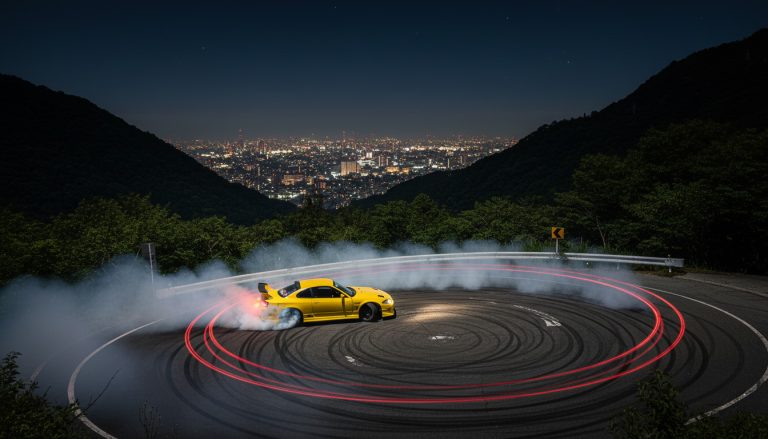
In Tokyo Drift, they slide around the spiral ramp and drift in the parking spots. Do that in real life and the Kanagawa Prefectural Police will descend on you so fast your head will spin. The parking area is for parking. It’s “Hard Parking”—looking cool while standing still.
The real drifting happens deep in the mountains (the touge) or at organized circuit events. The street drifting scene from the 90s has been hammered by crackdowns. It still happens, sure. Late at night. Remote docks. But you aren’t going to stumble upon a DK vs. Sean Boswell race in the middle of Shibuya.
Police presence at Daikoku is real. They have a station on the island. Sometimes they get on the loudspeakers and yell at everyone to leave. “CLOSE. CLOSED. GO HOME.” It’s a buzzkill, but it’s part of the game.
The Subcultures: Itasha and Bosozoku
While you look for Supras, you are going to see two very distinctly Japanese subcultures. Do not be alarmed.
- The Itasha:
“Itasha” roughly translates to “cringy car.” High-performance vehicles wrapped entirely in anime characters. You will see a $100,000 Nissan GT-R covered in cute anime girls with neon underglow. It’s polarizing—but the craftsmanship is undeniable. Otaku culture meets Car culture. - The Bosozoku:
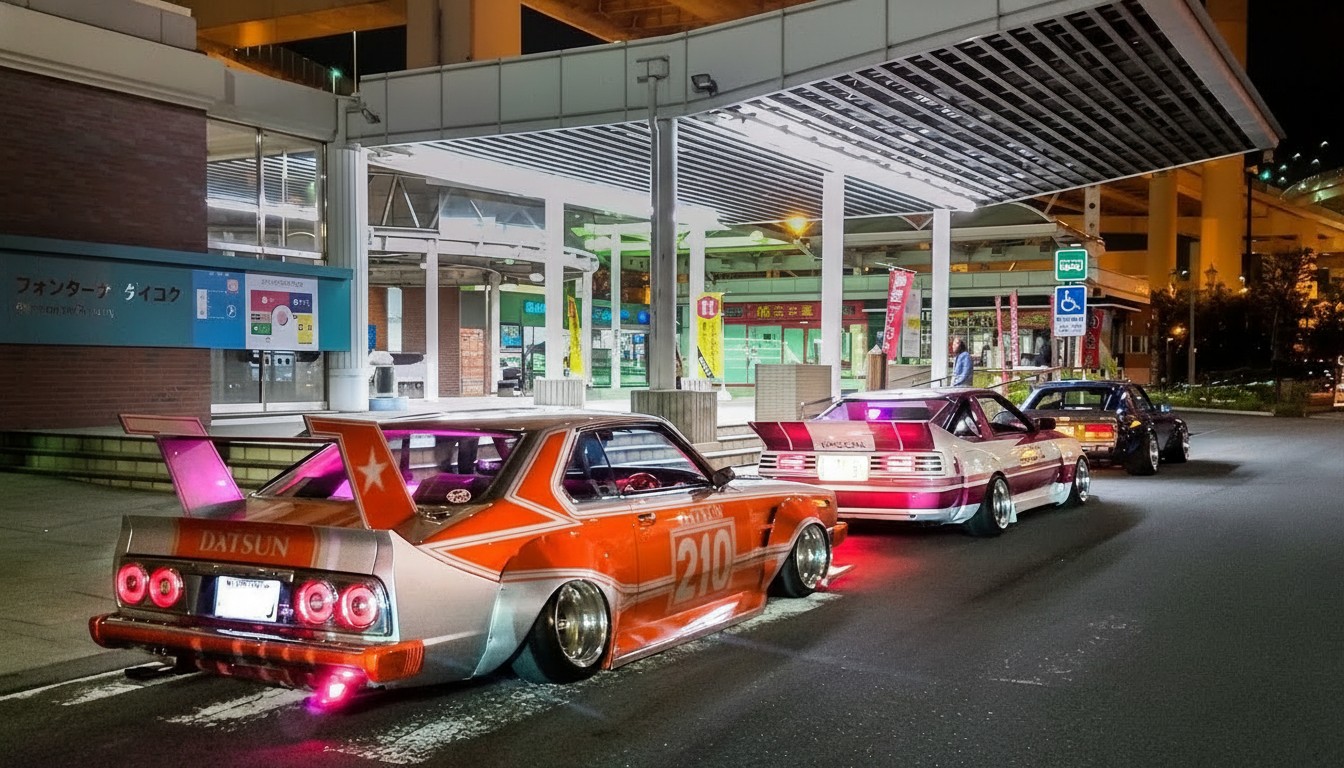
You will hear them before you see them. These are the motorcycle gangs (sometimes cars) revving their engines in a rhythmic musical pattern. They have extended exhaust pipes that stick six feet into the air and play the Godfather theme on air horns. They aren’t drifters; they are noise-makers. Rebels of the road.
Official Drifting Events: D1 Grand Prix and the Odaiba Connection
If you want to see tire smoke without going to jail, look for the D1 Grand Prix. The pro league.
Odaiba, an artificial island in Tokyo Bay, often hosts the finals. It’s not a track—it’s a massive parking lot they convert into a drift course. It feels surprisingly similar to the movie aesthetic. Skyscrapers in the background, huge crowd, insane driving.
The drivers here—guys like Kawabata and Daigo Saito—are aliens. They throw cars sideways at 100mph inches from concrete walls. Usually happens in November, maybe October. If you’re in town… go. It wipes the floor with Formula Drift in the states.
Retail Therapy: Super Autobacs and UpGarage
You can’t take the cars home. Take the parts instead.
Super Autobacs (Tokyo Bay Shinonome)
Technically just across the bridge in Koto City, but a mandatory pilgrimage. Forget AutoZone. This is a department store for cars. It has a Starbucks and a Tsutaya bookstore inside surrounded by endless aisles of Recaro seats, HKS turbos, and air fresheners. It’s clean, massive, and smells like new rubber and coffee.
UpGarage (Yokohama Machida)
If Autobacs is the mall, UpGarage is the treasure hunt. This is a used parts chain—the “Sohonten” (Head Office) in Yokohama is the motherlode. You can find used R32 taillights, vintage Nardi steering wheels, and exhaust manifolds hanging from the ceiling for pennies on the dollar. Chaotic and beautiful. Bring an empty suitcase.
Must-Visit Automotive Spots: Nismo Omori Factory and Mooneyes Area-1
You’re already in Yokohama. Might as well hit the shrines.
Nismo Omori Factory
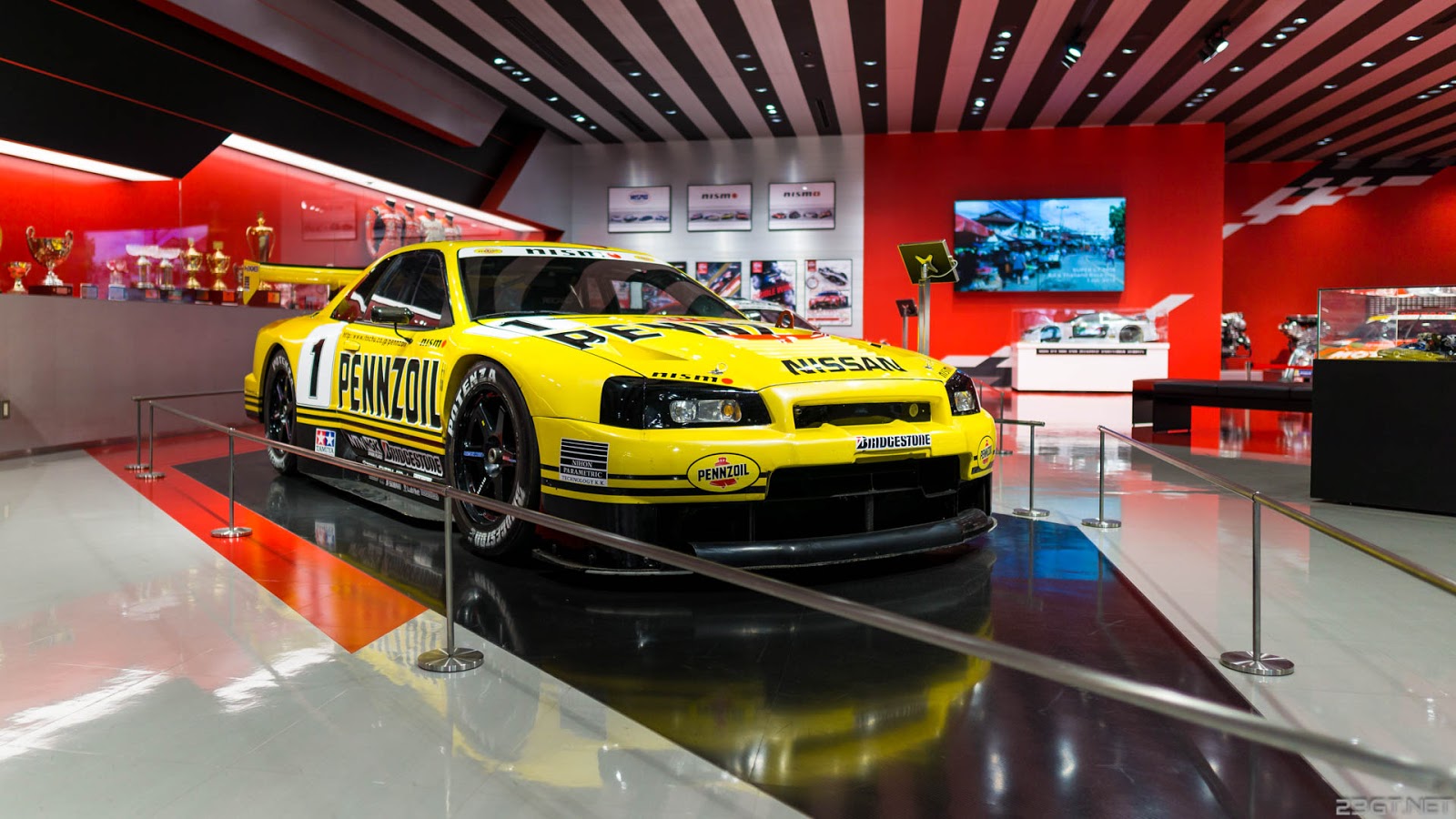
It’s in Tsurumi-ku. Holy ground for Nissan nerds. Not a museum exactly—it’s a working race shop where they restore Z-Tunes and build engines. Glass walls let you peek into the service bays. Seeing a disassembled RB26DETT engine block sitting on a clean bench is like seeing art. Check the hours—they close randomly and are strict about where you can walk.
Mooneyes Area-1
Totally different vibe. Located in Honmoku. This is where Japan meets Southern California. The building is bright yellow; you can’t miss it. Hot rods, lowriders, custom vans. Japan has a massive obsession with 50s/60s American culture, and Mooneyes is the epicenter. Grab a burger at the Moon Cafe next door. Feels like a time warp.
Car Meet Etiquette: Rules Every Visitor Should Follow
Don’t be “That Gaijin.”
I’ve seen tourists climbing on fences, touching cars, revving their rental Yaris like idiots.
- Don’t touch. These cars are people’s babies.
- Don’t block traffic. The trucks need to get through.
- Be quiet. I know, it’s a car meet. But excessive revving brings the cops. If the cops come, the meet ends. If you rev, you are the enemy.
- Trash. Take it with you. Japan is clean. Don’t leave your energy drink can on the ground.
Beyond the Parking Lot: Exploring the Wangan Expressway Night Drive
The meet is great, but the drive is better.
The “Bayshore Route” (Wangan) is a stretch of highway connecting Tokyo to Yokohama. Driving this at night is a religious experience. You pass through industrial zones that look like Blade Runner, over the Yokohama Bay Bridge, and see the Tokyo skyline glittering across the water.
It’s mostly straight. Wide. Smooth. This is where the Mid Night Club used to run. You’ll see locals doing “pulls”—short bursts of acceleration. Just cruising in the left lane (the slow lane in Japan), watching the tail lights of a Supra disappear into the distance… that’s the real movie. That’s the feeling you came here for. Lonely. Electric.